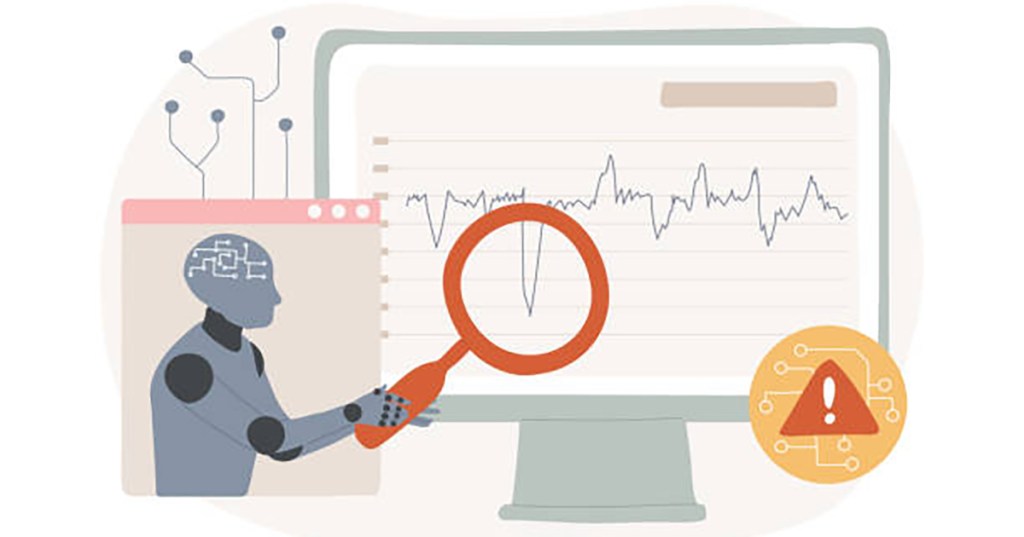
Every payroll leader I have worked with over the last two decades has the same quiet fear. Not that payroll will fail loudly, it rarely does, but that it will fail quietly. A duplicate payment that sits in the ledger for three months. An overpayment to someone who left the company in March that nobody notices until year end reconciliation. A rate override that was correct once and never got reversed. These are not dramatic failures. They are small, slow leaks, and by the time someone spots them, the number attached to the fix is never small.
This is the most complete version of this piece I have put together. It covers the pain points, where anomalies actually originate, what they cost, the process discipline that has to exist before any technology helps, a concrete checklist of the specific checks every payroll cycle should run, what Oracle has genuinely built inside Oracle Cloud Payroll, and a realistic path forward. Every Oracle capability mentioned is sourced directly from Oracle’s own announcements and documentation, linked at the end, so you can verify everything yourself and take it straight to your Oracle account team.
Intended for: CTOs, CFOs, payroll and HR leaders, Oracle Cloud consultants, and technology managers evaluating AI adoption in payroll operations.
1. The Pain Point: Why Payroll Keeps Leaking Money Nobody Notices
Oracle Cloud Payroll, like most modern payroll engines, is built on rules. Rate tables, validation checks, approval hierarchies, retro triggers. Rules are excellent at catching the errors you already anticipated. They are far less useful against the errors you did not think to write a rule for.
Most payroll irregularities fall into a small number of recurring categories, and it helps to name them plainly rather than treat every issue as a one-off surprise.
- Overpayments, often the result of a clerical error or duplicate entry, such as a paycheck processed twice or hours miscalculated during a manual adjustment.
- Underpayments, which typically trace back to an incorrect wage rate, a misclassified employment type, or a straightforward calculation mistake that nobody caught before disbursement.
- Unauthorized changes, meaning a pay rate, hours entry, or deduction that was altered outside the normal approval path, which is one of the clearer warning signs of potential fraud rather than simple error.
Beyond individual transactions, a handful of broader patterns are worth watching for, since they tend to correlate with higher fraud risk specifically:
- Frequent personnel changes in the team that inputs, submits, or approves payroll, since understanding exactly who has their hands on the process at any given time is central to catching problems early.
- Sudden, unexplained shifts in an individual’s pay pattern, such as an employee who repeatedly receives bonuses or overtime without a clear justification on file.
- Undisclosed personal relationships between people involved in payroll processing and the employees whose pay they control, which is exactly the kind of conflict clear policy and separation of duties is designed to prevent.
None of these patterns get caught by a rules engine, because a rules engine only knows what you told it to watch for. This is exactly why the industry, and Oracle specifically, has been investing so heavily in AI that learns what normal looks like from the data itself, rather than waiting for someone to write a rule after the fact.
2. Where Anomalies Actually Originate: It’s Rarely the Calculation Itself
This is a point I think gets underweighted in most conversations about payroll accuracy, and it changes where you should actually look first. Assuming your payroll engine, whether in-house or a third-party platform like Oracle Cloud Payroll, is correctly configured, the calculation logic itself is rarely where anomalies originate. Calculation rules are embedded in the engine and tend to behave consistently once set up properly.
The real exposure sits upstream, in the data and workflows that feed payroll long before any calculation happens. The most common sources include:
- Incorrect employee master data, a wrong tax code, an outdated address, an incorrect employment classification, sitting quietly until it produces a wrong result.
- Late or unapproved HR changes, a promotion, a transfer, a termination that reaches payroll after the cutoff, or without proper sign-off.
- Misclassified employment terms, someone coded as exempt when they should be non-exempt, or on the wrong contract type entirely.
- Incomplete onboarding or termination workflows, a new hire who starts being paid before their record is fully built out, or a termination that doesn’t fully deactivate someone’s pay eligibility.
- Manual adjustments made outside controlled approval paths, a manual override entered outside the normal, controlled approval path, however well intentioned in the moment.
- Disconnected systems and manual handoffs between departments, where HR, operations, and payroll each hold a piece of the truth and nobody owns the full picture.
The practical implication is important: payroll is rarely the source of the problem, but it is almost always where the problem finally becomes visible. That reframes the whole conversation. Fixing payroll anomaly detection is not only a payroll technology problem, it is a data governance and cross-functional workflow problem, and the strongest defenses have to start upstream of the payroll run itself.
3. The Business Impact: What This Actually Costs
The numbers here are large enough that I think every CFO and CTO reading this should sit with them for a moment.
Financial Leakage
- Organizations lose an estimated 2 to 4 percent of total labor spend to what industry research calls payroll leakage, unintended losses from process errors, system limitations, and fraud combined, according to a 2025 to 2026 global survey of senior payroll and finance leaders conducted by KPMG and UKG.
- Nearly 38 percent of organizations report between $1 million and $5 million in annual payroll losses.
- That can translate to $10 to $15 million in avoidable loss every year for a 50,000 employee organization, even from a single percentage point of leakage.
- Some analysis suggests the visible leakage figure is only part of the picture, with an additional two to three times that amount going undetected entirely, simply because most organizations lack the visibility to see it.
Compliance Exposure and Consequences
An anomaly that goes uncaught long enough eventually surfaces in an audit, and by then it is not one transaction, it is a pattern spanning months or years. It is worth being explicit about the full range of consequences involved, since it goes well beyond the immediate dollar figure of the incorrect payment itself:
- as employees lose confidence that they will be paid correctly and on time.
- since underpayment or misclassification issues are a common and well-documented trigger for regulatory penalties.
- Lasting reputational damage that can take years to rebuild once a public or large-scale payroll failure comes to light.
At the extreme end, unchecked anomalies of this kind are exactly how organizations end up with so-called ghost employees on the books, unauthorized transactions that persist for months, and ultimately a payroll breakdown serious enough to require executive-level intervention. That is why a demonstrable duty of care around payroll accuracy belongs inside an organization’s broader governance framework, not treated as a purely operational, back-office concern.
The AI Adoption Gap
Here is a detail worth knowing before your organization decides where it stands relative to peers. The same KPMG and UKG research found that only 47 percent of C-suite and senior leaders currently use AI in production payroll environments, with data accuracy, integration gaps, and lack of standardization cited as the top reasons for holding back. Most organizations are not behind because they are ignoring the technology. They are behind because the underlying data and system foundations are not ready for it yet.
4. The Honest State of AI Anomaly Detection Today
Here is where I want to be direct rather than promotional, because there is a lot of noise in this space right now, and I think that honesty is exactly what makes the rest of this post more valuable to you, not less.
What the Research Actually Shows
Recent applied research testing common anomaly detection models, Isolation Forest, One-Class SVM, neural networks, and logistic regression, against simulated payroll data found something worth sitting with. None of these models performed at a level you would call production ready out of the box.
- Logistic regression, the simplest of the group, came out as the most balanced performer of the four.
- The more sophisticated unsupervised models, Isolation Forest and One-Class SVM, struggled badly with false positives or failed to flag real anomalies at all.
- The correlation between the payroll features these models were given, hours worked, base pay, overtime, and actual anomalous behavior turned out to be weak across the board.
Why This Matters for Your Deployment Plans
Off the shelf machine learning models, applied naively to payroll data, are not yet a plug and play solution. They need real historical enterprise data, feature engineering that reflects how your specific payroll behaves, and a human in the loop who understands payroll well enough to know when a flagged anomaly is real.
This is exactly why the process foundation described in the next section, and Oracle’s approach described further down, both matter so much. Technology layered on top of weak data and weak process controls will not solve the underlying problem, it will just produce confident-sounding false positives.
5. Building the Right Foundation Before You Add Technology
Before any software, AI model, or embedded agent enters the picture, there is a set of process fundamentals that has to be in place. I have seen organizations skip straight to buying anomaly detection software while these basics were still missing, and the results were predictably disappointing.
People and Training
Everyone who touches payroll needs proper training on the procedures, controls, and rules they are expected to apply consistently. This sounds obvious, and it is routinely neglected anyway. A well-trained team is simply far more likely to notice when something looks wrong in the first place.
Separation of Duties
The people who input, submit, or authorize individual payroll entries should not be the same people who sign off on the final payroll run for the period. In smaller organizations where a fully separate team is not realistic, introducing an independent sign-off step on the final payroll before disbursement remains one of the most effective structural defenses against manipulation and fraud available.
Sampling and Periodic Full-Population Review
Each pay period, a percentage of paid employees should be sampled and traced back to source, checked against the underlying HR workflow and onboarding record that authorized their pay. Separately, and less frequently, the broader employee population should be audited as a whole to catch systemic issues that a small sample would miss.
Formal Documentation of Findings
Any anomaly a process check turns up should be formally recorded, not just quietly corrected and forgotten. Good documentation captures three things for every finding: a clear analysis of the likely cause, the impact, whether financial, related to employee hardship, or indicative of fraud, and the remedial action taken. This record is what lets an organization withstand later scrutiny from auditors, regulators, or its own leadership.
6. A Best-in-Class Checklist: The Specific Checks Every Payroll Cycle Should Run
This is the part I think is most immediately actionable. Modern payroll and workforce systems, including Oracle Cloud Payroll, already hold the data needed to run these checks. The gap most organizations have is not capability, it is consistency of application. These checks work best when run every single pay period, not retrospectively as a scramble to fix payroll after something has already gone wrong.
- Reconcile paid employees against the system of record, comparing everyone who was actually paid against the official system of employee records, specifically to catch so-called ghost employees or continued payments to people who have already left.
- Check for duplicate bank accounts or employee identifiers, since a shared account number or duplicated employee identifier is a common signature of either a data error or something more deliberate.
- Review overtime payments for unusual patterns, looking specifically for repeated, unusually high overtime that lacks a clear business justification.
- Confirm overtime was not paid to contractually exempt employees, since paying overtime to someone contractually ineligible for it is a specific, checkable error that recurs more often than it should.
- Review each employee’s pay movement period over period, flagging anything that shifts by more than a defined percentage threshold from the prior pay period, which is a reliable, simple way to surface erroneous pay items at the individual level.
- Review employees on long-term paid absence, performing basic due diligence to confirm the absence is properly authorized and correctly coded.
- Compare total payroll gross value against the prior pay period, since a jump here can indicate something like a duplicated overtime file or an erroneous bonus payment file slipping through.
- Reconcile the validated payroll value against what was actually posted to the general ledger, confirming that nothing was altered between the point of validation and the point of posting.
None of these checks require exotic technology. They require discipline, a defined threshold for what counts as unusual, and a habit of running them every cycle rather than only when something has already gone visibly wrong.
7. What Oracle Is Actually Doing Here: A Direct Look at the Product
This is the part I want payroll managers to read most closely, because it is not marketing language, it is a summary of what Oracle has actually announced, shipped, and documented, with a source for every claim.
A Quick Timeline of Oracle’s Payroll AI Investment
- March 2025: Oracle introduces AI Agent Studio for Fusion Applications, giving customers and partners a platform to create, extend, and manage AI agents across the enterprise at no additional cost.
- September 2025: Oracle announces 13 new AI agents across Fusion Cloud HCM, including the Payroll Run Analyst Agent, bringing the total number of agents in the application to more than 100.
- October 2025: Oracle expands AI Agent Studio with a new AI Agent Marketplace, giving customers access to validated, partner built agents alongside Oracle’s own, plus support for a broader range of large language models.
- March 2026: Oracle introduces Fusion Agentic Applications, a new class of coordinated, multi-agent applications including the Workforce Operations Agentic Application, purpose built to reduce payroll issues and accelerate workforce scheduling.
Payroll Run Analyst Agent
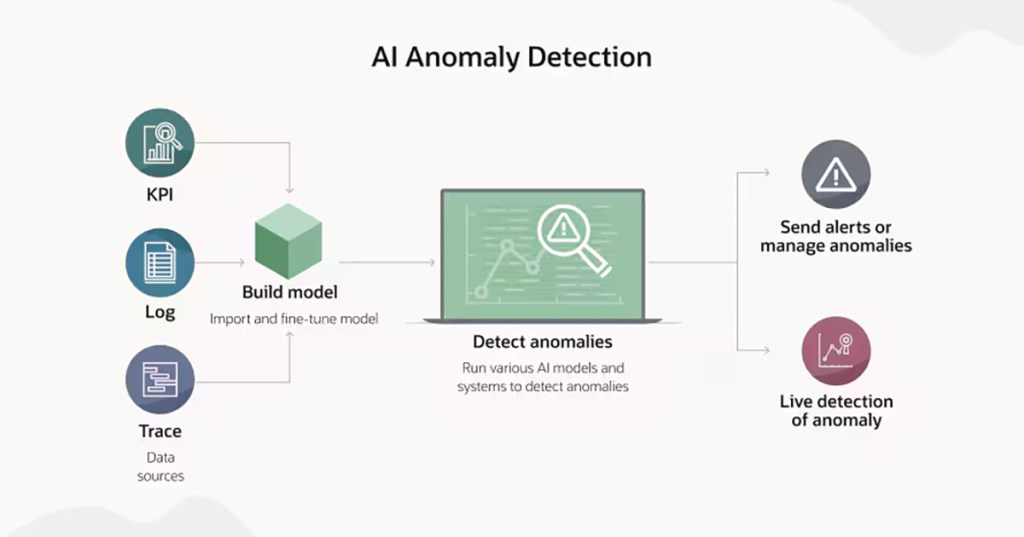
This is the agent most directly relevant to anomaly detection, and it comes straight from Oracle’s own product announcement. The agent proactively identifies potential anomalies within a specific payroll run and explains the contributing factors, for example new hires not yet loaded, unprocessed retroactive pay events, or salary changes with unexpected downstream effects. Critically, it always operates within the context of a specific employee and payroll run, so what a payroll administrator gets is not a generic alert, it is a grounded explanation they can act on immediately, which maps directly onto several of the checklist items above, particularly period over period pay movement and unexpected salary change effects.
Pay Analyst: Payslip Transparency for Every Employee
Introduced as part of the 25C release of Oracle Fusion Cloud Payroll, the Pay Analyst is a conversational, AI powered digital assistant built on Oracle’s AI Agent framework. It lets employees review payslips, get plain language explanations of specific earnings or deductions, and ask pay related questions directly, all within their existing security permissions. From a payroll manager’s perspective, the real value here is upstream of anomaly detection: it lets employees self-audit their own pay and surface discrepancies earlier, which means fewer issues sit undetected until year end.
Workforce Operations Agentic Application
Announced in March 2026 as part of Oracle’s broader Fusion Agentic Applications launch, this is a coordinated team of specialized AI agents, not a single assistant, designed specifically to reduce manual data gathering, accelerate scheduling approvals, and reduce payroll issues before they reach the payroll run. Oracle describes these agentic applications as operating entirely inside the existing Fusion security framework, autonomously progressing routine actions within guardrails while surfacing only the exceptions and decisions where human judgment genuinely changes the outcome.
AI Agent Studio: Building What Standard Agents Do Not Cover
Oracle AI Agent Studio is the platform underneath all of this, and it is where payroll teams with genuinely unique complexity get real value. According to Oracle’s own documentation, AI Agent Studio lets organizations:
- Create their own AI agents using pre-built templates paired with natural language prompts, so a new agent can be scoped to a specific business scenario without custom development.
- Extend the 50-plus prebuilt Fusion Applications agents by adding organization specific documents, tools, prompts, or APIs, so an embedded agent understands your policies rather than a generic version of them.
- Orchestrate agent teams arranging multiple agents to work alongside people on complex, multi-step tasks, with checkpoints and approvals added wherever human judgment is required.
- Select the best-fit large language model choosing from a range of large language models including options from OpenAI, Anthropic, Cohere, Google, and Meta, so the model can be matched to the specific use case.
- Access an ecosystem of certified partner agents through the AI Agent Marketplace, where customers can deploy Oracle-validated, partner built agent templates directly inside their existing Fusion workflows.
For any enterprise with collective bargaining rules, multi country payroll complexity, or patterns standard configurations were never built to anticipate, this is the capability that turns the checklist in the previous section from a manual monthly exercise into something an agent can help run continuously.
Security and Governance Are Built In, Not Bolted On
Every one of these capabilities, according to Oracle’s own trust and security framework documentation, operates within the existing Fusion security configuration, policies, and access controls. Agents only ever see and act on data within a user’s assigned security roles, and organizations do not need to reconfigure security settings or sign new agreements to use them. Fusion Agentic Applications add role-based access, approval frameworks, and end-to-end traceability, including a full execution path for every autonomous action, specifically to support accountable decision making in regulated environments like payroll.
Keeping Payroll Data Visible on an Ongoing Basis
Alongside the agents themselves, Oracle Fusion HCM Analytics includes purpose-built Payroll Analytics, giving payroll and HR leaders prebuilt, ready-to-use workforce insights to monitor payroll trends on an ongoing basis. This is worth pairing with anomaly detection agents rather than treating as a separate initiative, since a manager who can see the trend data is in a much better position to judge whether an agent’s flagged anomaly is worth escalating.
8. A Practical Path Forward
If you are a CTO, CFO, or payroll leader trying to figure out what to actually do with this, here is the sequence I would recommend, based on what I have seen work and what I have seen fail.
Step 1: Fix the Process Foundation First
Before evaluating any technology, confirm the basics from Section 5 are actually in place: proper training, genuine separation of duties, an independent sign-off step, and regular sampling. Technology cannot compensate for a process that has no defined controls to begin with.
Step 2: Start Running the Checklist Manually if You Are Not Already
Even without any new technology, the checks in Section 6 can be run today with the data already sitting inside Oracle Cloud Payroll. Establishing that discipline first gives you a baseline to judge whether any agent or AI tool is actually adding value later.
Step 3: Turn On What Oracle Has Already Built
Check whether Payroll Run Analyst Agent and Pay Analyst are enabled in your environment today. Both are part of Fusion Cloud HCM, both are documented above, and both are designed to work on your live data and existing security roles rather than a simulated dataset.
Step 4: Build What Is Genuinely Unique to You in AI Agent Studio
If your organization has collective bargaining rules, multi country complexity, or payroll patterns that do not look like a textbook case, that is exactly where a custom agent, or a partner agent from the AI Agent Marketplace, earns its keep.
Step 5: Keep a Human Accountable for Every Flagged Anomaly
Define upfront what the AI is allowed to flag autonomously and what always requires a person with payroll judgment to sign off before anything is corrected or disbursed. Oracle’s own governance model, with role-based access and full execution traceability, is designed to support exactly this kind of accountability.
Step 6: Document Every Finding and Measure Before You Expand
Every anomaly caught, whether by a manual check or an AI agent, should be documented with cause, impact, and remedial action, exactly as described in Section 5. Track false positive rates, time to resolution, and dollars caught before payment for a defined pilot period before rolling anomaly detection out further.
A Quick Reference Checklist
- Confirm separation of duties and an independent final sign-off step are actually in place
- Run the period-over-period, ghost employee, duplicate identifier, and overtime checks from Section 6 every pay cycle
- Audit payroll data completeness and consistency across HR, time, and finance systems
- Confirm whether Payroll Run Analyst Agent and Pay Analyst are enabled in your Fusion environment
- Identify your organization’s genuinely unique payroll complexity that standard agents will not catch
- Define what AI can flag autonomously versus what requires human sign off
- Document every finding with cause, impact, and remedial action for future defensibility
- Pair anomaly detection agents with Oracle Fusion HCM Payroll Analytics for ongoing trend visibility.
9. Where This Is Heading
I do not think the honest research findings on generic anomaly detection models mean this technology is not worth pursuing. They mean the value lives in exactly where Oracle has chosen to invest: agents grounded in live enterprise data and real security roles, combined with the process discipline, separation of duties, sampling, documented findings, and a consistent checklist, that has always been the actual foundation of good payroll governance. Technology accelerates good process. It does not replace the absence of one.
What determines whether your organization actually benefits from this is whether you put in the same discipline Oracle applies to its own governance model, and the same discipline experienced payroll controllers have always applied: real data, a defined set of checks run every cycle without exception, clear accountability for every flagged anomaly, and a human who understands payroll standing behind every decision the system makes on your behalf. Get that right, and this is one of the most genuinely valuable capabilities available to payroll teams on the Oracle Cloud platform today.
10. Frequently Asked Questions
What exactly counts as a payroll anomaly?
Broadly, any discrepancy or error in payroll processing that affects what an employee is actually paid, whether that’s an overpayment, an underpayment, or a change made outside the normal authorized process.
What usually causes payroll anomalies?
Most trace back to upstream data and workflow issues rather than the payroll calculation itself, incorrect employee master data, late or unapproved HR changes, misclassified employment terms, or manual adjustments made outside a controlled approval path.
How can payroll anomalies actually be detected in practice?
A combination of consistent process discipline (regular audits, sampling, separation of duties) and technology (embedded AI agents, analytics, and a defined checklist run every pay period, not just when something already looks wrong).
What happens if payroll anomalies go unaddressed?
Consequences extend well beyond the incorrect payment itself, including employee dissatisfaction and loss of trust, regulatory fines and penalties, and lasting reputational damage, and at the extreme end, systemic issues like ghost employees or a full payroll breakdown.
Is AI ready to fully automate payroll anomaly detection today?
Not yet, on its own. Independent research on common anomaly detection models shows mixed real-world performance, so the strongest results come from pairing embedded, data-grounded agents like Oracle’s Payroll Run Analyst Agent with the process fundamentals and checklist described in this post, not from technology alone.
Views here are my own, based on what I have seen across payroll transformation engagements, published practitioner guidance on payroll anomaly detection, and what Oracle’s own published announcements and documentation actually show.
Sources and Further Reading
Directly from Oracle
- Oracle AI Agents Help HR Leaders Boost Workforce Productivity (official announcement, Payroll Run Analyst Agent) ORACLE | www.oracle.com/news/announcement/oracle-ai-agents-help-hr-leaders-boost-workforce-productivity-and-enhance-performance-management-2025-09-16/
- Oracle Fusion Cloud Payroll 25C What’s New (Pay Analyst) ORACLE | docs.oracle.com/en/cloud/saas/readiness/hcm/25c/payr-25c/25C-payroll-wn-f39468.htm
- Oracle Introduces Fusion Agentic Applications (Workforce Operations Agentic Application) ORACLE | www.oracle.com/news/announcement/oracle-introduces-fusion-agentic-applications-2026-03-24/
- Oracle Expands AI Agent Studio with Agentic Applications Builder ORACLE | www.oracle.com/news/announcement/oracle-expands-ai-agent-studio-for-fusion-applications-with-agentic-applications-builder-2026-03-24/
- Oracle Introduces AI Agent Studio (original launch announcement) ORACLE | www.oracle.com/news/announcement/oracle-introduces-ai-agent-studio-2025-03-20/
- Oracle Expands AI Agent Studio with AI Agent Marketplace ORACLE | www.oracle.com/news/announcement/ai-world-oracle-expands-ai-agent-studio-for-fusion-applications-with-new-marketplace-llms-and-vast-partner-network-2025-10-15/
- Oracle AI for Fusion Applications (product overview) ORACLE | www.oracle.com/applications/fusion-ai/
- Oracle Fusion HCM Analytics, Payroll Analytics ORACLE | www.oracle.com/fusion-ai-data-platform/hcm-analytics/
Industry Research and Data
- UKG and KPMG, Global Payroll Survey 2025 to 2026 | www.ukg.com/company/newsroom/ukg-and-kpmg-nearly-40-employers-suffer-millions-dollars-preventable-losses-annually-due-global-payroll-errors
- HR Dive, Employers May Lose Up to 4% of Labor Spend to Poor Payroll Management | www.hrdive.com/news/payroll-leakage/816701/
- Symmetry, Payroll Leakage: 9 Causes of $1 to 5M Annual Loss and What Prevents Them | www.symmetry.com/payroll-tax-insights/payroll-leakage-causes-prevention
Practitioner Guides and Industry Perspectives
- keyHRinfo.com, Detection of Anomalies in Payroll Data | keyhrinfo.com/
- Xemplo, Graham Jenkins, Payroll Anomalies Detection Guide | www.xemplo.com/guide/payroll-readiness
This post also draws on independent applied research testing machine learning models for payroll anomaly detection in Oracle Cloud Payroll environments, and on my own experience across payroll transformation engagements.
About the Author: Sudarshan Mondal is an Oracle HCM Cloud architect with 24+ years of experience helping global organizations transform how they manage their people. He has designed and delivered HCM Cloud implementations across Healthcare, Higher Education, Energy, and Financial Services, covering Core HR, Payroll, Compensation, and Benefits. He writes about enterprise technology, workforce strategy, and the evolving role of HR in large organizations. All content on this site reflects his personal opinions and does not represent the views of his employer or any affiliated organization.
 Sudarshan Mondal
Leave a comment