Ten consecutive years. That’s not luck — that’s relentless commitment to innovation.
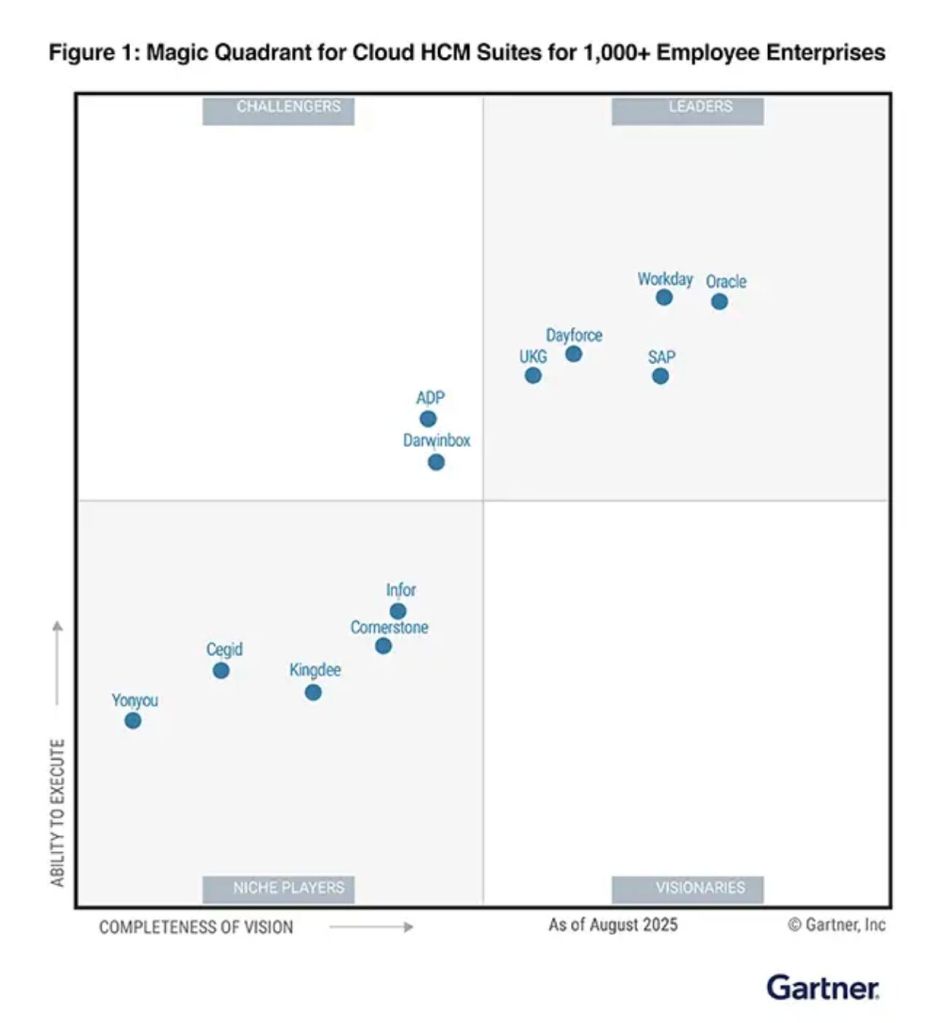
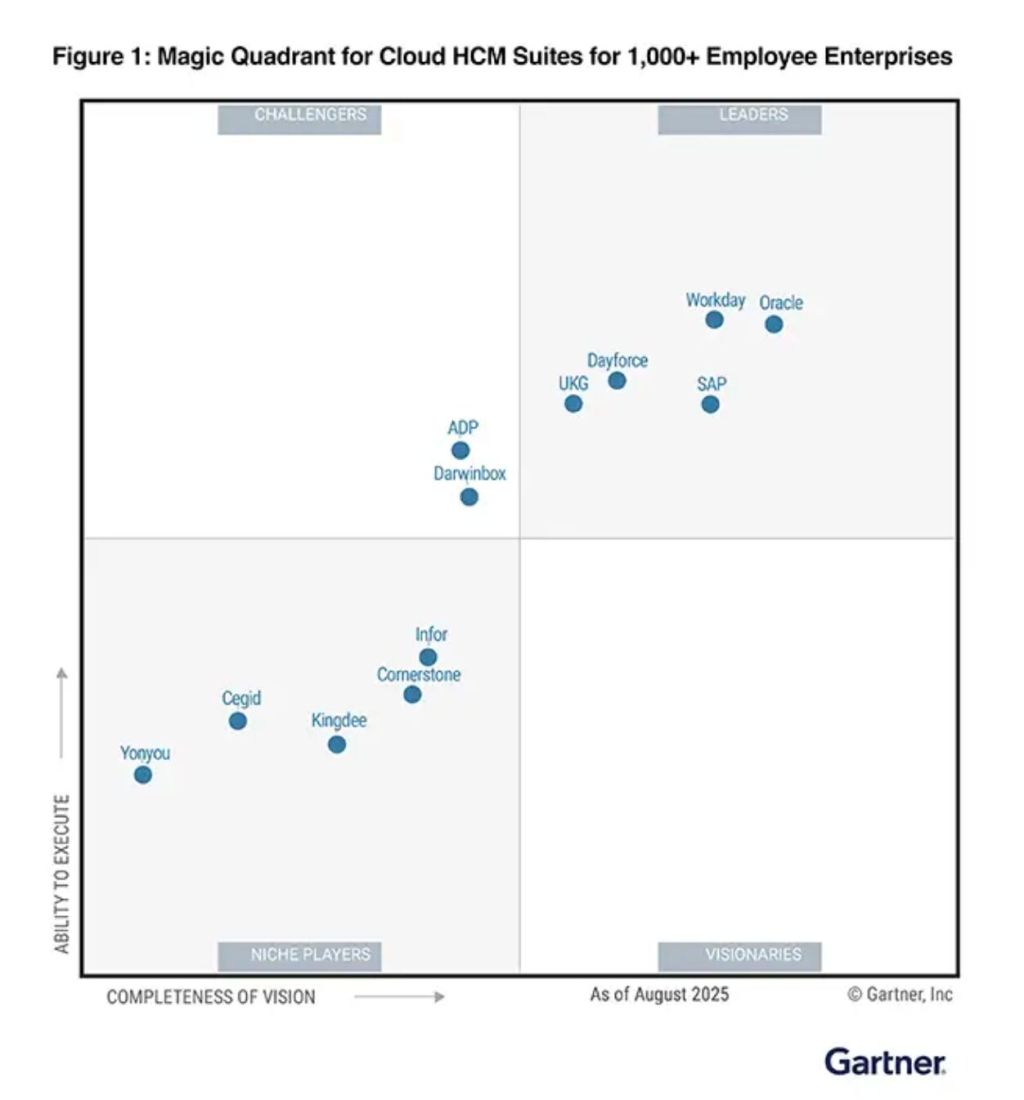
When Gartner named Oracle HCM Cloud a Magic Quadrant Leader for the tenth straight year — and positioned it furthest right on Completeness of Vision for the eighth year running — I wasn’t surprised. But I was proud. Proud because every transformation I have led over the past 24+ years has been built on platforms that earn that kind of recognition. And Oracle HCM Cloud has earned it.
What the Magic Quadrant Actually Measures
The Gartner Magic Quadrant for Cloud HCM Suites is not a popularity contest. It evaluates two dimensions that matter deeply to anyone leading an enterprise transformation: Ability to Execute and Completeness of Vision.
Ability to Execute asks: does this platform deliver, at scale, for complex organizations? Can it handle a 100,000-employee enterprise running payroll across twelve countries? Can it manage unionized compensation structures, grade step progressions, and benefits administration simultaneously — without breaking?
Completeness of Vision asks: where is this platform going? Is the product team building for today’s problems or tomorrow’s? Are they investing in AI, automation, and the kind of workforce intelligence that organizations will need in the next decade?
Oracle HCM Cloud’s position — furthest right on Vision for eight consecutive years — tells me that Oracle is not just keeping pace with where HR technology is going. They are defining it.
Why This Matters on the Ground
I have led Oracle Cloud HCM transformations across Healthcare, Higher Education, Energy, and Financial Services. I have sat across the table from CHROs, CFOs, and CIOs who all ask the same question before signing off on a multi-million-dollar transformation program: Why Oracle?
The Gartner recognition is part of my answer. But only part.
The deeper answer is what I have seen this platform do in the real world. I have watched Oracle HCM Cloud handle the complexity of unionized payroll for large healthcare systems — environments where a single configuration error can affect thousands of employees and trigger grievances. I have seen it power enterprise-scale compensation progression frameworks that would take teams of analysts months to manage manually. I have implemented it across global organizations spanning dozens of countries, time zones, and regulatory environments.
The platform holds. It scales. It delivers.
And increasingly, it is doing something that no previous generation of HCM technology could: it is beginning to think.
The AI Inflection Point
What excites me most about Oracle’s current trajectory is not the recognition — it’s the roadmap.
Oracle HCM Cloud is embedding AI across the suite in ways that are genuinely transforming how HR operates. We are talking about AI-driven compensation recommendations that factor in market data, internal equity, and performance signals simultaneously. We are talking about decision intelligence models that surface workforce risks before they become workforce crises. We are talking about automation that frees HR professionals from administrative burden so they can focus on the work that actually requires human judgment.
I am actively building in this space — developing AI-driven HCM solutions including automated compensation frameworks and workforce analytics models. The foundation I build on is Oracle HCM Cloud. The reason is that Oracle’s platform gives me the data architecture, the integration layer, and the AI tooling to actually bring these ideas to life at enterprise scale.
Completeness of Vision is not just a Gartner score. It is a description of where Oracle is taking this platform — and why I keep choosing it.
A Note on the Competitive Landscape
The Magic Quadrant is worth reading in full. Workday sits alongside Oracle in the Leaders quadrant — a strong competitor with a loyal customer base and genuine strengths, particularly in financial services and technology verticals. SAP SuccessFactors continues to serve large enterprise customers with deep ERP integration requirements.
But Oracle’s consistent rightward movement on Vision — year after year — reflects something specific: a commitment to building not just a system of record, but a system of intelligence. That distinction is becoming more important, not less, as organizations demand more from their HR platforms than clean data and reliable payroll.
The question is no longer whether your HCM platform can run payroll accurately. The question is whether it can tell you why your best people are leaving — and what to do about it before they walk out the door.
What This Means If You Are Planning a Transformation
If you are a CHRO, CIO, or transformation leader evaluating Cloud HCM platforms, here is my practitioner’s take:
The Gartner recognition matters — not as a rubber stamp, but as a signal that independent analysts with rigorous evaluation criteria have assessed this platform against every major alternative and concluded that Oracle leads on both execution and vision. That is a meaningful data point.
But the more important question is fit. Every organization has unique workforce complexity — union structures, global payroll requirements, regulatory environments, legacy integrations. The best platform is the one that can handle your specific complexity, at your scale, with a roadmap that aligns to where your workforce strategy is going.
After 24+ years of leading these transformations, I can tell you that Oracle HCM Cloud handles more complexity, in more industries, than any other platform I have worked with. The tenth Gartner Leader designation is simply the latest confirmation of something I have seen proven in delivery, again and again.
Closing Thought
Technology leadership is not measured in product launches or press releases. It is measured in the outcomes it enables for the organizations that bet their workforce strategy on it.
Ten years at the top of the Magic Quadrant is a statement about sustained excellence — the kind that only comes from listening to customers, investing in the right capabilities, and having the discipline to execute on a long-term vision when the market is pushing for short-term noise.
That is why, when clients ask me why Oracle HCM Cloud, my answer is simple.
Because ten years of evidence is hard to argue with.
Sudarshan Mondal is a Solution Manager and Oracle Cloud HCM Transformation Leader at Deloitte Consulting LLP, with 24+ years of global experience leading enterprise HCM transformations across Healthcare, Higher Education, Energy, and Financial Services. He is a four-time Deloitte Outstanding Performance Award recipient and holds an Executive MBA from the University of Central Florida.
Making work better for humans — and humans better at work.
Reference: Gartner, Magic Quadrant for Cloud HCM Suites for 1,000+ Employee Enterprises, Published 8 September 2025.
#OracleHCMCloud #Oracle #CloudHCMSuites #HRTransformation #FutureOfWork #EnterpriseHR #GartnerMagicQuadrant
 Sudarshan Mondal
Leave a comment